

Israeli National Security Minister Itamar Ben-Gvir recently announced that, should he become defense minister, he intends to revise the ethical code of the Israel Defense Forces, known as Ruach Tzahal, or the Spirit of the IDF. His proposal would replace the principle of Tohar HaNeshek, Purity of Arms, with what he calls Tzidkat HaNeshek, Righteousness of Arms, and place greater emphasis on the pursuit of victory and what he claims are the moral teachings of Jewish tradition.
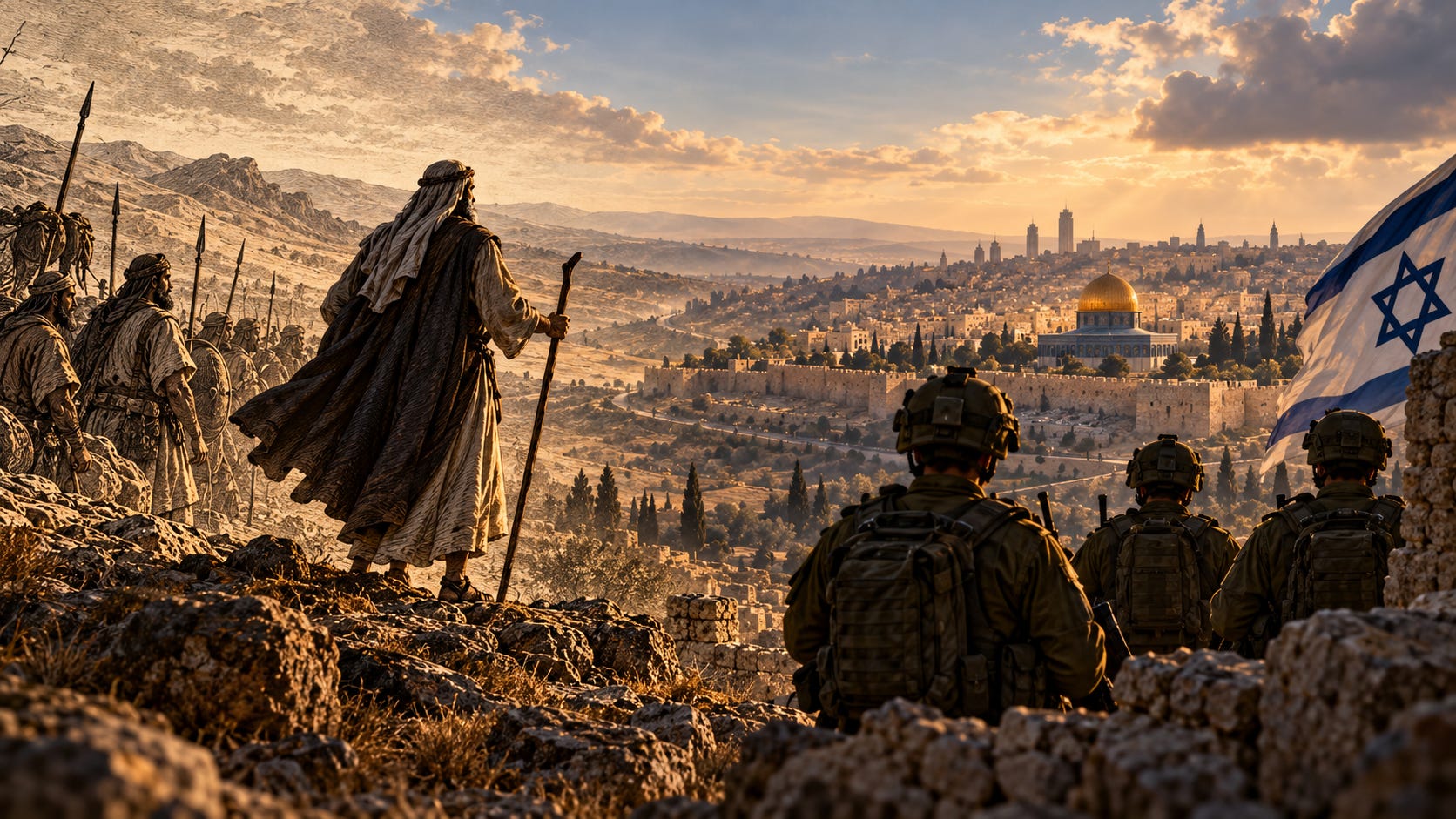
His proposals reportedly include removing explicit language restricting the use of force to what is necessary and protecting uninvolved civilians and prisoners, and the reference to universal moral values (JNS, Jerusalem Post, and Arutz Sheva, October 15-16, 2026). Instead, he would emphasize the Talmudic teaching that when someone comes to kill you, you should rise early to kill him first (Sanhedrin 72a), known as the rule of the pursuer, or “rodef”.
The principle of rodef is certainly an authentic expression of Jewish law. However, the existing code already demands the defense of Israel, the pursuit of victory, and the willingness to accept necessary risks in carrying out military missions. To maintain that the principles of the pursuer rule, or the broader morality of Jewish law, are absent from the current code misrepresents both the code itself and the Jewish tradition that Ben-Gvir claims to represent.
Ben-Gvir is not the first to make his claim: when the code was introduced in 1994, it was criticized for containing nothing distinctively Jewish. The current text does name "the tradition of the Jewish People throughout their history" as one of its four sources, alongside the traditions of the IDF and of the State of Israel and universal moral values, but it cites no verse or halakhic source. While that code could be made more explicitly Jewish, the claim that Jewish values are not represented within it is itself lacking. The proposed revisions would, in fact, make it less Jewish in letter and in spirit.
The rule of the pursuer is indeed relevant, although it is insufficient by itself to explain the departures from general morality allowed for in the context of war. One relevant factor is that the activation of the war designation identifies the parties involved as national entities rather than individuals, so that even those who may not be active threats, but are connected to the larger group, become parties to the conflict. However, this does not justify the wanton, unnecessary killing of civilians in that group.
The same halakhah that licenses killing the enemy also limits it. A pursuer may be killed only when there is no other way to stop him; if he can be stopped by disabling a limb, killing him reverts to prohibited homicide (Sanhedrin 74a; Maimonides, Hilkhot Rotzeach 1:13). The principle therefore contains its own requirement of necessity. The existing code's instruction to use force only to the extent required is consistent with this halakhic concern, even as the precise application of necessity in wartime must take account of the distinct framework governing military operations. A revision that keeps the permission and deletes the qualifier distorts the halakhah in a dangerous way.
To the extent that the pursuer rule is scaled up to the level of a nation, it would permit harm to civilians only insofar as the aggression cannot otherwise be countered, and no further, at least within the framework of rodef itself. Whether those who play an ancillary role in aggression can themselves be assigned the status of pursuer, as R. Asher Weiss observes, is a question that has been considered by earlier authorities and is far from clear, and in any event would be difficult to extend to those who have no part in supporting it, particularly those too young to participate. Before the war against Amalek, Saul warns the Kenites to separate themselves so that they not be killed with Amalek (I Sam. 15:6), which Rabbi Weiss cites as a scriptural requirement to separate uninvolved civilians from the fighting. However, should such efforts prove unsuccessful, this does not render necessary war illegitimate.
The distinction becomes additionally relevant with regard to prisoners, whose circumstances have changed because they are no longer actively engaged in combat. Whatever the justification for using force against an enemy in battle, the capture of that enemy requires a reassessment of the necessity of continued force. The law of the pursuer, if that is to be the driving source, does not allow killing one whose pursuit has been thwarted, a position perhaps reflected in Elisha's admonishment to the king of Israel regarding captured Aramean soldiers: "Would you strike those you have captured with your sword and bow?" (II Kings 6:22).
The rules of siege also speak to values. The Torah requires an offer of peace before attacking a city (Deut. 20:10), and the tradition derived from it requires that the siege leave a fourth side open so that anyone who wishes can flee (Sifrei, Matot 31:7; Maimonides, Hilkhot Melakhim 6:7). Nachmanides gives two reasons: compassion toward enemies even in war, and the fact that a population with no escape fights to the last and raises casualties on both sides. The Abravanel adds a reading of the verse (Deut. 20:21) in which the siege is directed at those actually engaged in war, so that those who are not should be allowed to leave.
The application of this rule to a modern war was disputed in 1982. During the siege of Beirut, Rabbi Shlomo Goren insisted on the open fourth side, and Rabbi Shaul Yisraeli disagreed, on the ground that Israel was being attacked and the matter was one for military experts (Rabbi Goren, Meishiv Milchamah, pp. 240-265; Rabbi Yisraeli, Techumin 4, pp. 25-36). The dispute concerned how the terrorists were to be treated; both agreed that non-combatants must be allowed to leave. As Rabbi Shlomo Brody documents, both positions exceeded what international law then demanded, under which absolute sieges were customary (Ethics of Our Fighters, pp. 241-242).
Jewish values begin with Abraham, and the biblical history of warfare begins with him as well. When he learns that his nephew Lot has been taken captive by an alliance of conquering kings, he immediately assembles his forces and pursues the attackers. He defeats them, rescues Lot, and restores the captives and their possessions and keeps nothing for himself (Gen. 14:14-24).
The sensitivity towards unjustified killing, even when seeking to save lives from a pursuer, can be found already here. Immediately after the victory, God tells him not to fear (Gen. 15:1). Rashi, following the Midrash, explains that Abraham was afraid that among those he had killed in battle there may have been a righteous person (Rashi, Gen. 15:1; Bereshit Rabbah 44:4). He is apparently relieved of his distress; one suggestion is that he came to understand that his activity had not been simply the rescue of an individual, which would justify lethal action against the aggressors, but not any non-threatening individual who may be in the path. Rather, he had been waging a war, which allowed for a broader field of attack (see R. Mordechai Carlebach, Chavatzelet HaSharon, Gen., pp. 142–144). The distinction offers an explanation for why Abraham could be reassured that his actions were justified, while the concern that preceded that reassurance reflects the seriousness with which he approached the taking of life.
The concern is evident as well in his grandson Jacob. Before confronting Esau, he is described as very afraid and distressed (Gen. 32:8), and Rashi explains that he feared being killed and also feared having to kill. This distress was present, if stated with different emphasis, in the modern era in the remark attributed to Golda Meir that forgiving the killing of Israeli sons is less difficult than forgiving having been forced to kill the sons of the other side. Later in that same Torah portion of Vayishlach, Simeon and Levi kill the male population of Shechem, and while Maimonides explains the basis for doing so (Hilkhot Melakhim 9:4), Nachmanides, Rabbi Samson Raphael Hirsch, and others read Jacob's rebuke as indicating that it was not justified, since it killed those who had not participated in harming the family (Gen. 34:30; 49:5-7).
War operates under a distinctive framework, one that necessarily changes the application of even the most basic principles of halakhah and ethics. If war is to be accepted as legitimate, it must also be granted that there inheres within it the justification for radically changed norms. In peacetime, the prohibition on murder functions as a formalist rule; among other reasons, allowing individuals to decide when it is justified to take life is incompatible with a functioning society. At the same time, threats to life on a national or global scale that cannot be removed peacefully require a framework able to weigh consequences (see Chatam Sofer, Resp. OC 208 and CM 44; Mishpat Kohen 143). By its nature, to accomplish its goals, war must be able to function consequentially. Still, this is not to eliminate the space for military ethics; thankfully, humanity has developed to the point where moral frameworks can be imposed even within the consequentialist reality of the battlefield.
That framework also assumes a careful and balanced process, one that may evolve and be formed by the progression of morality among humanity in general. Rabbi Shaul Yisraeli compared the historic acceptance of war as an institution to the logic informing dina demalkhuta dina, the principle that the law of the land binds, and suggested that the international development of the laws of war has raised the morality of conduct within war through the same mechanism (Amud HaYemini, pp. 194-195). Rabbi Yitzchak Sheilat describes the broad Torah values contained in the Geneva Conventions (Medinah, Halakhah, VeKavanot HaTorah, pp. 317-319).
Further still, every gesture toward the sanctity and preciousness of life contributes to an evolving moral understanding. As such, a reference to universal moral values does not oppose the Jewish tradition of war ethics, but rather records how that tradition has understood its own development. The fact that a moral principle has become widely accepted by humanity does not make it any less a part of Jewish morality.
The current code also affirms that every person has inherent worth, regardless of origin, religion, or nationality. This originates with the Torah's teaching that every human being is created in the image of God (Gen. 1:27); the provisions on necessary force, non-combatants, and prisoners are expressions of that principle in the context of a battlefield. The pragmatism of warfare is only defensible because it emanates from a values-based premise: human life is of infinite worth. Once that principle is established, it then becomes possible to act to maximize gains and minimize losses. It is worth going to war to save millions of lives because each single life is endlessly valuable.
None of this is to presume to tell the informed experts of the IDF how to conduct their wars, or to ignore or downplay the unique threats confronting Israel at this moment and throughout its history. However, to tell the IDF that its code ignores Jewish values and law is itself a dismissal of the content of that tradition, and threatens to commit the very offense that it claims to correct.
The Jewish people are described as "if not prophets, then sons of prophets" (Pesachim 66a). There are times when the intuited values of centuries of tradition find a voice even when their sources are not explicitly referenced. The Code of Ethics of the IDF may be one such example.
The rules of war are exceedingly complex, and the recognition of that reality reverberates throughout a tradition that has placed human dignity, the preservation of human life, and the defeat of evil in a delicate and sometimes difficult partnership. Each of these commitments reflects a different dimension of the same divine morality, and none can be dismissed without affecting the integrity of the whole. Any assessment of the authenticity and integrity of that structure requires a far more qualified voice than the one currently volunteering to provide it.
For now, protecting life often means that aggressive and harsh measures must be taken against those who threaten it, and tragically, this inevitably impacts those who are innocent as well. But the belief in a perfectable world means that we can continue to strive against all obstacles to model a humanity in the image of God, and that someday, it can be different.